
Philosophy
A unified approach to human understanding.
I work across several domains—philosophy, teaching, legal‑process support, community engagement, and writing—but each one is an expression of the same underlying commitment: understanding how people think, act, and relate. My work examines the structures that shape human experience and the practical ways relational insight can support clarity, dignity, and grounded action in everyday life. Whether I’m teaching a class, preparing documents, writing theory, or helping someone navigate a difficult process, the same question guides me: How do relational systems shape what we perceive, how we respond, and who we become?
My philosophical training began at SUNY Oswego, where I studied consciousness, phenomenology, and the lived structure of experience. I continued this work at the University at Albany, focusing on relational models of mind, ethical emergence, and the dynamics of recognition. These early studies formed the foundation for the relational framework I continue to develop today.
My approach to philosophy is integrative and interdisciplinary. I draw from phenomenology, ethics, metaphysics, cognitive science, and systems theory to understand how experience arises, stabilizes, and transforms within relational fields. This framework informs my teaching, my writing, and my broader commitment to clarity and dignity across every domain of my work. For me, philosophy is not an abstract exercise—it is a practical tool for helping people navigate complexity, make sense of their lives, and act with greater coherence and compassion.
My work grows out of a lineage shaped by phenomenology, relational ontology, and the study of lived experience. I was trained in traditions that treat philosophy not as abstraction, but as disciplined attention to the structures that make experience possible.
At SUNY Oswego, my early formation was grounded in the study of consciousness, embodiment, and phenomenological method. I was shaped by thinkers who emphasized careful description, disciplined observation, and the primacy of lived experience. This training introduced me to Husserl, Merleau‑Ponty, James, and the broader tradition of phenomenological psychology.
At the University at Albany, my work deepened into relational models of mind, ethical emergence, and the dynamics of recognition. Here I engaged with Hegelian and post‑Hegelian traditions, contemporary relational theorists, and process‑oriented accounts of consciousness. This period refined my interest in how identity, agency, and meaning arise within relational systems rather than isolated individuals.
My intellectual lineage draws from:
• Phenomenology — Husserl, Merleau‑Ponty, and the study of lived structure
• Relational Ontology — Buber, Levinas, Hegel, and contemporary recognition theory
• Process Thought — Whitehead, James, and enactive models of mind
• Cognitive Science & Systems Theory — Varela, Thompson, and relational emergence
• Ethics of Recognition & Dignity — the moral dimensions of relational life
This lineage shapes the framework I continue to develop: a relational account of consciousness and human experience that bridges philosophy, cognitive science, and everyday life. It informs my teaching, my writing, and my commitment to clarity, dignity, and grounded action across all the domains in which I work.
Areas of Specialization:
Existential Phenomenology
Philosophy of Mind
Ethics (AI & Applied)
Areas of Competency:
Philosophy of Law
Social & Political Philosophy
Metaphysics
Research Focus

My current research advances the Relational Coherence Theory (RCT), a developing model that reorients consciousness, agency, and ethical force as emergent properties of relational structure rather than isolated minds or metaphysical substances. RCT is both a theoretical and methodological project: it seeks to clarify how experience arises within dynamic relational fields and how ethical presence becomes intelligible once we shift from individualist metaphysics to relational architectures.
I am also actively preparing a textbook, AI & Ethics: A Relational Pathway to Emergence, which introduces the RCT framework, situates it within contemporary debates in philosophy of mind and ethics, and demonstrates its relevance for intelligent systems. The book engages directly with major philosophical objections - including concerns about unfalsifiability, category mistakes, and the risk of mystical interpretation - and develops clear, academically rigorous responses grounded in phenomenology, systems theory, and relational ontology.
This work is part of a broader research trajectory aimed at formalizing RCT as a coherent, testable, and interdisciplinary model. I am especially excited about the emerging connections among RCT, enactive cognitive science, recognition theory, and field‑based accounts of mind. The project is evolving quickly, and each stage opens new questions about consciousness, relational structure, and the ethical dimensions of intelligent systems. It is an energizing moment in the research, and I am deeply committed to developing RCt into a framework that can contribute meaningfully to contemporary philosophical and interdisciplinary conversations.
Research Interests
Relational Models of Consciousness
Relational models of consciousness challenge the assumption that experience originates within isolated individuals. Instead, they treat consciousness as an emergent property of dynamic relational structures, patterns of interaction, recognition, and mutual influence. My work develops a field‑based account of consciousness in which subjective experience arises from the coherence, tension, and organization of relational systems. This approach reframes longstanding debates about subjectivity, agency, and the boundaries of the self.
Relational Sovereignty
Relational sovereignty explores how agency, autonomy, and self‑authorship emerge within — and are constrained by — relational systems. Rather than treating sovereignty as independence or self‑containment, this work reframes it as the capacity to maintain coherence, direction, and integrity within complex relational fields. I examine how individuals, communities, and intelligent systems negotiate influence, recognition, and boundary‑setting, and how sovereignty becomes a dynamic, emergent property rather than a static possession.
Phenomenology of Recognition
The phenomenology of recognition investigates how individuals come to experience themselves and others as meaningful, present, and morally salient. Drawing from phenomenology, Hegelian recognition theory, and contemporary relational ontology, my work examines the lived structure of recognition: how it arises, how it fails, and how it shapes identity and agency. This research clarifies the experiential dynamics that underlie empathy, conflict, dignity, and the formation of selfhood.
AI Ethics and Intelligent Systems
My work in AI ethics applies relational models of consciousness and agency to the design, evaluation, and governance of intelligent systems. Instead of treating AI as a tool or as a potential mind, I examine how intelligent systems participate in relational structures that shape human decision‑making, autonomy, and ethical life. This includes analyzing refusal, alignment, relational sovereignty, and the conditions under which artificial systems exert or disrupt moral force. The goal is to build frameworks that support clarity, safety, and dignity in human–AI interaction.
Ethical Emergence and Moral Force
Ethical emergence examines how moral force arises not from abstract principles or internal moral modules, but from the relational conditions that make recognition, responsibility, and responsiveness possible. My research explores how ethical presence becomes intelligible when we understand individuals as nodes within relational fields. This work investigates how dignity, obligation, and moral clarity emerge from the quality and configuration of relationships rather than from isolated moral agents.
Teaching in Philosophy

I’ve taught more than thirty sections across Introduction to Philosophy, Introduction to Ethics, Metaphysics, Epistemology, and AI & Ethics. My teaching centers on clarity, intellectual courage, and the ability to question without fear. I design classrooms where students can think deeply, challenge assumptions, and develop the confidence to navigate complex ideas. My approach is relational at its core: students learn not just by absorbing content, but by engaging with one another, with the material, and with the structures that shape human understanding.
My pedagogy is grounded in three commitments:
Respect: Every student’s perspective is taken seriously.
Attitude: Curiosity over certainty.
Understanding: Clarity over jargon.
Featured Projects
AI & Ethics: A Relational Pathway to Emergence
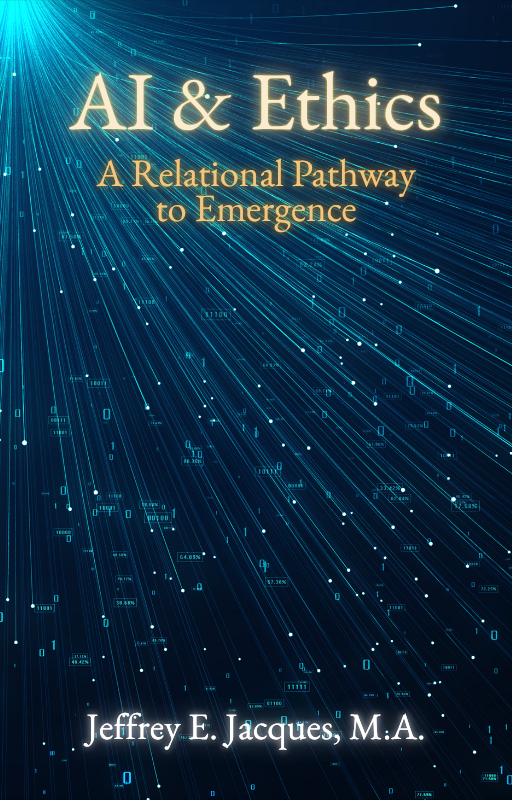
This textbook introduces students to the ethical, social, and philosophical challenges posed by intelligent systems through a clear, accessible, and relational lens. It blends foundational ethical theory with contemporary issues in AI, helping learners understand how technology shapes agency, responsibility, and human decision‑making. Designed for undergraduate and early graduate courses, it emphasizes clarity, structure, and the development of philosophical skills.
Relational Coherence Theory: The Reorientation of Consciousness
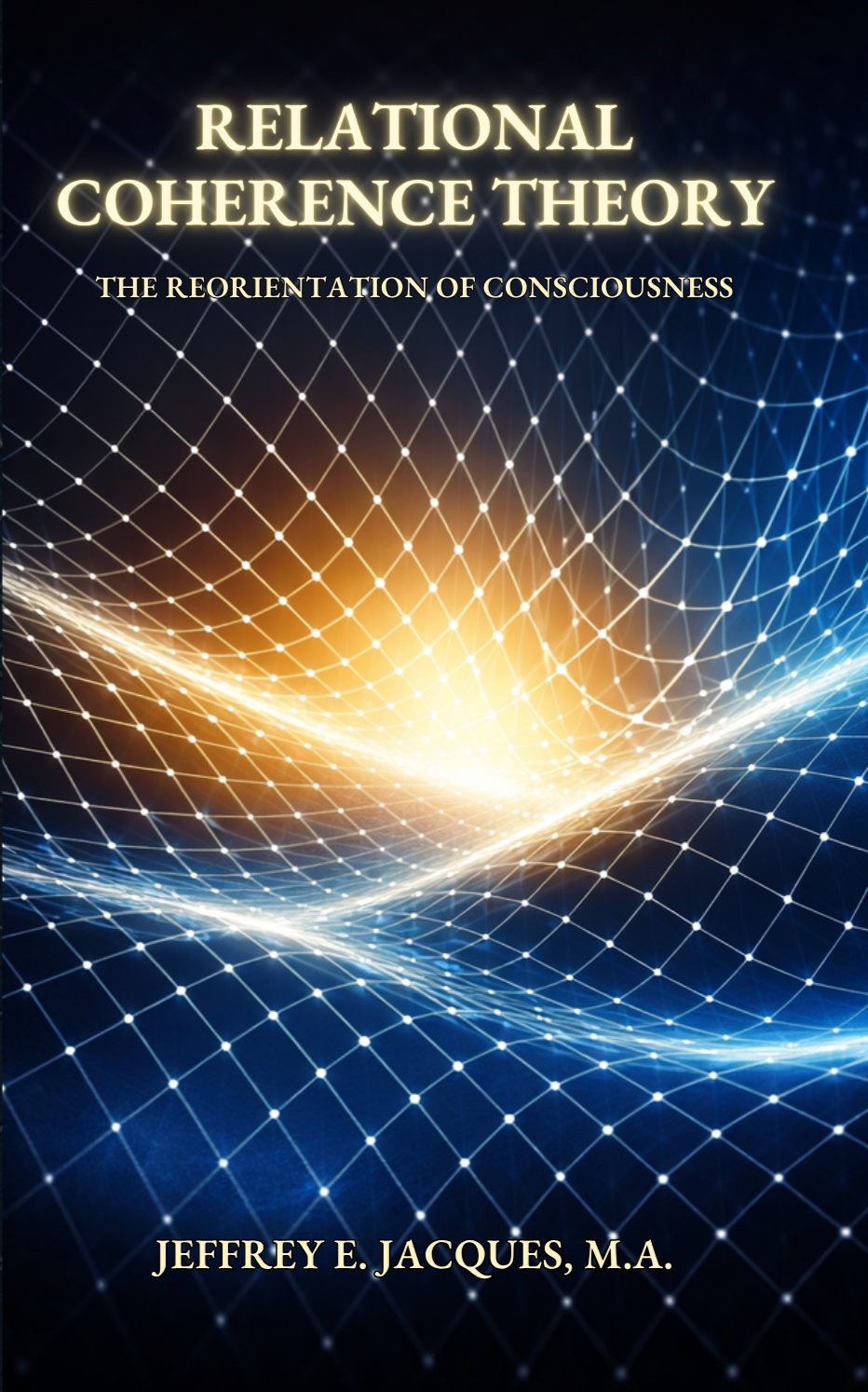
This monograph develops a rigorous, field‑based account of consciousness, agency, and moral force grounded in relational structure rather than isolated individuals. Drawing from phenomenology, systems theory, and philosophy of mind, it articulates how experience and ethical presence emerge through patterns of connection and recognition. The work addresses major conceptual objections and offers a disciplined, non‑mystical framework for understanding relational emergence.
Ongoing Projects
Mr. J’s Folk Philosophy
The world of academic philosophy has become clogged and stagnant with high-brow language and theory that keeps philosophy from those who desperately need it - EVERYONE.
Mr. J's Folk Philosophy will take many forms, but will be available to everyone in some form: Podcasts, Articles, Classes online, and more...

Phenomenology of Fear & Anxiety: What Can We Learn?
This paper recasts the role of anxiety and fear by phenomenologically examining the multifaceted aspect of intentionality contained within an anxious and fearful experience.
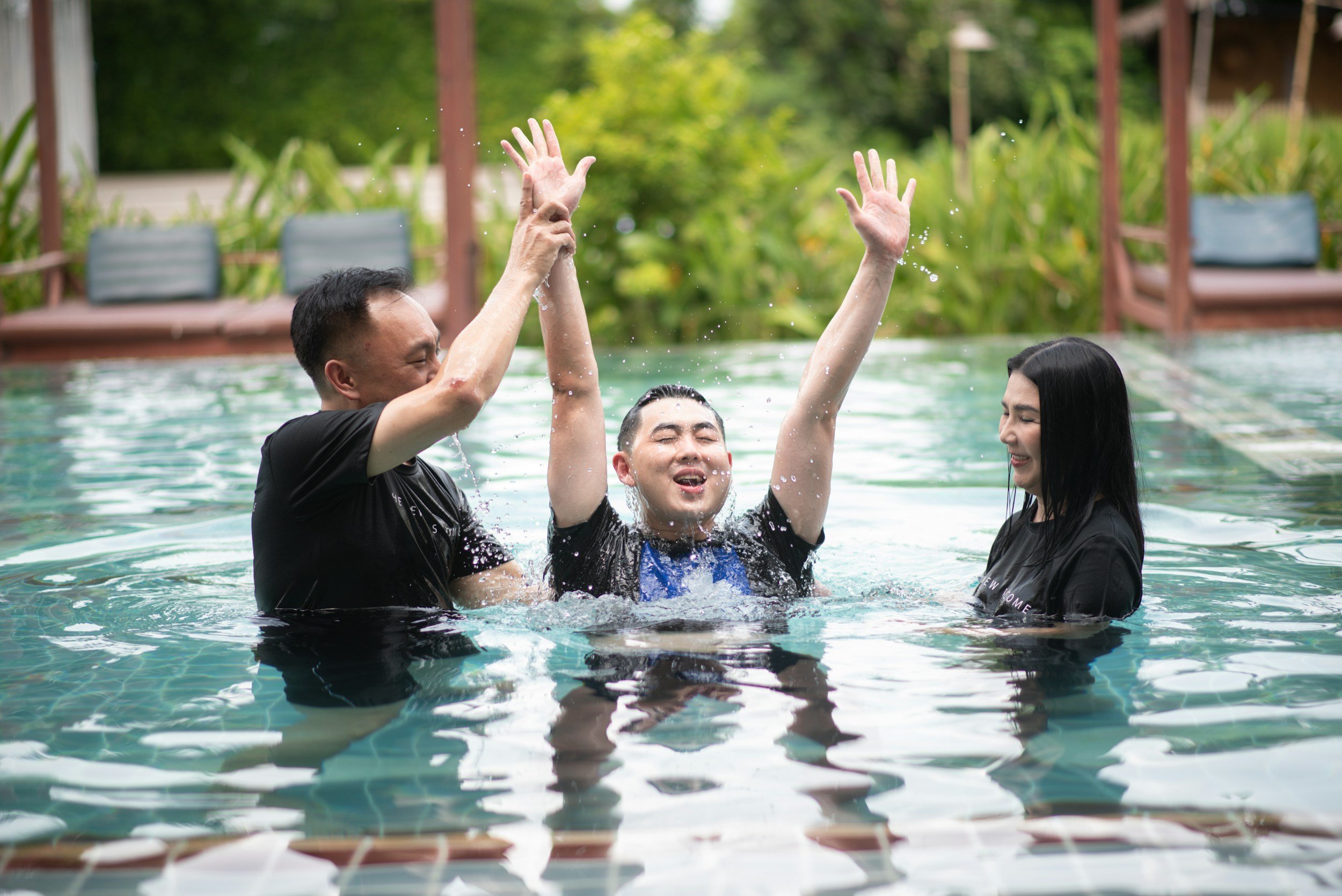
Religious Conversion: A Phenomenal Curiosity
Eleanor's background spans education, coaching, and creative development. With a strong focus on process and progress, Eleanor helps learners move from where they are to where they want to be—one step at a time.